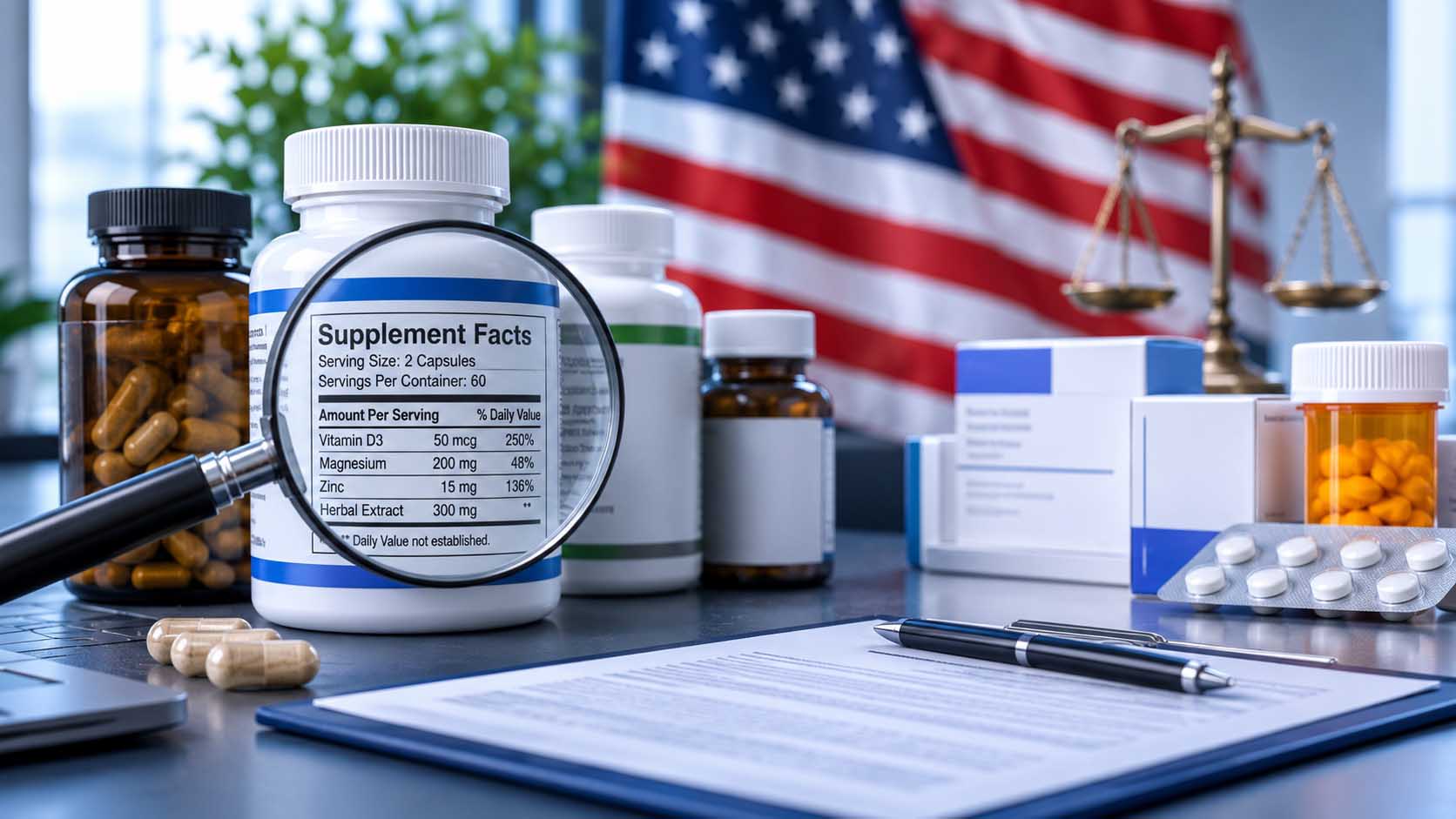
Understanding the difference between FDA-regulated vs. FDA-approved products is essential when evaluating dietary supplements in the United States. Although the Food and Drug Administration regulates dietary supplements, it generally does not approve these products for safety and effectiveness before manufacturers introduce them to the market.
Prescription medications, by contrast, generally require FDA approval before commercial distribution.
This regulatory distinction is particularly important for consumers exploring men’s wellness supplements, botanical formulations and products marketed for sexual health.
FDA-Regulated vs. FDA-Approved: Key Differences
FDA regulation refers to the agency’s authority to establish and enforce requirements governing products within its jurisdiction.
FDA approval, however, refers to a formal regulatory process through which the agency evaluates evidence supporting a product’s safety and effectiveness for its intended use.
These terms are not interchangeable.
| Regulatory characteristic | Dietary supplements | FDA-approved prescription drugs |
|---|---|---|
| Premarket product approval | Generally not required | Generally required |
| Evidence of clinical effectiveness before marketing | Generally not required | Required for approved indications |
| Manufacturing requirements | Applicable | Applicable |
| Labeling requirements | Applicable | Applicable |
| Postmarket safety monitoring | Applicable | Applicable |
| Claims to treat diseases | Generally prohibited | Permitted for approved indications |
A dietary supplement can comply with applicable FDA regulations without receiving FDA approval.
FDA Regulation of Dietary Supplements
The Dietary Supplement Health and Education Act of 1994, commonly known as DSHEA, established much of the modern regulatory framework for dietary supplements in the United States.
Under this framework, dietary supplements are regulated as a category of food rather than as conventional pharmaceutical drugs.
Manufacturers and distributors are responsible for ensuring that their products are safe, properly labeled and compliant with applicable legal requirements.
Certain new dietary ingredients may also require manufacturers to submit a premarket notification to the FDA. However, submitting such a notification does not constitute FDA approval.
The agency can take enforcement action against adulterated, misbranded or otherwise unlawful dietary supplements.
Are Male Enhancement Supplements FDA-Approved?
Dietary supplements marketed for male sexual enhancement generally do not undergo FDA approval for safety and effectiveness before entering the market.
This applies to botanical formulations, herbal blends and other nutritional products marketed for sexual wellness.
Consumers browsing commercial retailers, including the Natural Health Source website, should evaluate product descriptions within this regulatory context.
A product’s availability through an online retailer does not establish FDA approval, government endorsement or demonstrated clinical effectiveness.
Furthermore, products marketed as dietary supplements cannot lawfully claim to treat erectile dysfunction without meeting applicable drug regulatory requirements.
Understanding Different Types of Supplement Claims
Dietary supplement labeling may contain different categories of claims, each subject to specific regulatory requirements.
Structure and Function Claims
These claims describe how an ingredient may affect normal body structures or physiological functions.
For example, a statement about supporting normal energy metabolism may qualify as a structure and function claim when appropriately substantiated.
Such claims generally require a disclaimer explaining that the FDA has not evaluated the statement and that the product is not intended to diagnose, treat, cure or prevent any disease.
Disease Treatment Claims
Claims that a product cures erectile dysfunction, treats diabetes or reverses cardiovascular disease generally fall within drug regulation.
Manufacturers cannot avoid these requirements simply by describing their products as natural or herbal supplements.
FDA Registration vs. Product Approval
No. Facility registration and product approval represent different regulatory concepts.
A manufacturer may operate a registered facility or follow applicable current Good Manufacturing Practices (cGMP) without its individual dietary supplements receiving FDA approval.
Manufacturing requirements address matters such as ingredient identity, production controls, purity and product composition.
Although these requirements contribute to quality assurance, they do not independently demonstrate that a particular supplement produces its advertised health benefits.
Consumers should be cautious when marketing language presents facility registration or manufacturing compliance as equivalent to FDA endorsement.
How the FDA Addresses Supplement Safety Problems
The FDA monitors the dietary supplement marketplace and can investigate products associated with safety concerns or regulatory violations.
Potential enforcement activities include issuing warning letters, publishing safety alerts, seeking product seizures and taking other regulatory actions.
The agency has identified some products marketed for sexual enhancement that contain undeclared pharmaceutical ingredients. These substances may create serious health risks, particularly for individuals taking medications such as nitrates.
Consumers can consult the FDA’s dietary supplement information to learn more about regulatory requirements, safety concerns and adverse event reporting.
However, the absence of an FDA warning does not establish that a product is safe or effective.
What Consumers Should Verify Before Using Dietary Supplements
Understanding regulatory terminology is only one part of evaluating a supplement.
Consumers should also examine:
- Complete Supplement Facts information.
- Individual ingredient identities and quantities.
- Manufacturer contact information.
- Relevant warnings and potential medication interactions.
- Independent clinical evidence supporting advertised benefits.
- Available quality testing and manufacturing information.
Individuals with existing medical conditions or those taking prescription medications should discuss supplement use with a qualified healthcare professional.
Making Informed Decisions About Supplement Regulation
The distinction between FDA-regulated and FDA-approved products helps consumers understand what regulatory oversight does and does not establish. While dietary supplements must comply with applicable United States safety, manufacturing and labeling requirements, they generally do not undergo the same premarket approval process as prescription medications. Recognizing this difference allows consumers to evaluate wellness products more carefully, interpret advertising claims accurately and prioritize credible scientific evidence when making health-related decisions.