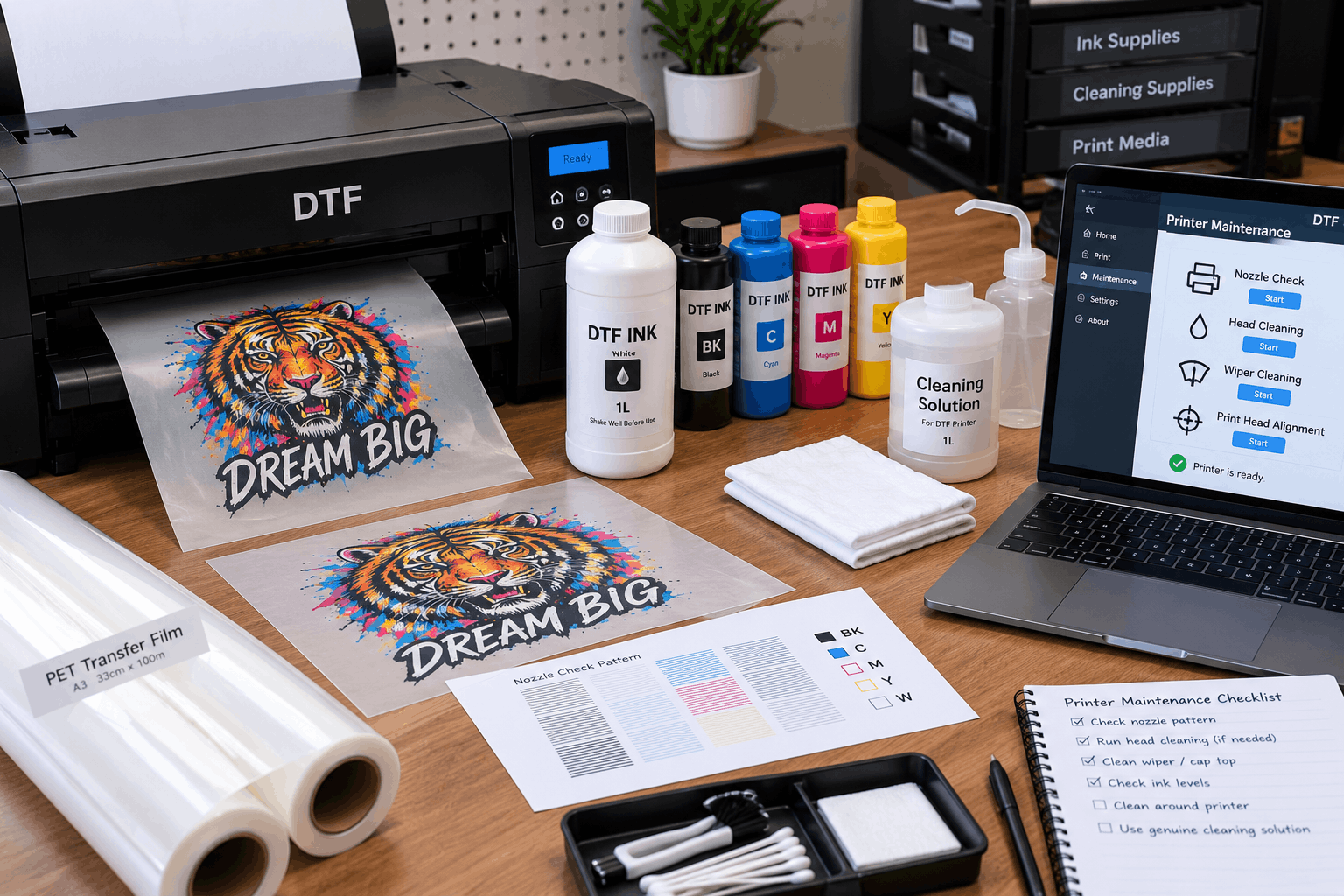
DTF white ink problems are among the most common maintenance concerns for direct-to-film printing. White ink is essential for creating an opaque base on garments, especially dark or colored fabrics, but it requires consistent care because its pigment can settle and affect ink flow.
The good news is that many white-ink issues can be reduced through proper printer operation, regular checks, suitable storage, and maintenance procedures recommended by the printer manufacturer.
Why Is DTF White Ink Different?
DTF printing uses CMYK inks together with white ink. The white layer provides an opaque foundation that allows colors and artwork to remain visible when transferred onto the garment.
White ink contains a high concentration of white pigment. Because of this composition, the pigment can settle when the ink remains unused or when the printer’s circulation system is not operating correctly.
That makes white ink management an important part of maintaining a DTF printer.
Common symptoms of white-ink problems include:
- Uneven white coverage
- Missing sections in a nozzle check
- Weak or inconsistent white layers
- Color changes caused by an incomplete underbase
- Ink-flow interruptions
- Visible banding in printed transfers
- Frequent cleaning requirements
These symptoms do not always have the same cause, so troubleshooting should begin by identifying what the printer is actually showing.
What Causes DTF White Ink Problems?
Several factors can contribute to white-ink issues. The exact cause depends on the printer, ink system, environment, and maintenance routine.
Pigment Settling
When white ink sits for an extended period, its pigment can settle. If the ink is not circulated or managed according to the printer’s operating instructions, the mixture may become less consistent.
This can eventually affect ink flow and print quality.
Infrequent Printer Use
DTF printers generally perform better when they are operated according to an appropriate maintenance routine rather than being left unused for long periods.
A printer that sits idle may develop ink-flow issues, particularly if the manufacturer’s recommended procedures for idle periods are not followed.
Clogged Nozzles
A partially blocked printhead nozzle can cause missing sections in the white layer. A nozzle check is therefore useful for identifying whether the problem is related to printhead output.
However, aggressive cleaning should not automatically be the first response. Follow the printer manufacturer’s recommended cleaning procedure and avoid repeatedly cleaning the system without identifying the underlying issue.
Environmental Conditions
The printing environment can also affect ink behavior and equipment performance. Excessive dust, unsuitable temperature or humidity, and poor workspace conditions can create additional maintenance challenges.
A clean, stable workspace is helpful for protecting the printer and keeping the printing process more consistent.
How Can You Prevent White Ink Clogging?
Prevention starts with a repeatable maintenance routine. Instead of waiting until print quality deteriorates, monitor the printer regularly and follow the maintenance instructions supplied for your specific model.
Check the Nozzles Regularly
A nozzle check can reveal missing or irregular lines before they become a major printing problem.
If the pattern shows abnormalities, use the manufacturer’s recommended troubleshooting process. Keeping records of recurring nozzle issues can also help identify whether a problem is occasional or becoming persistent.
Keep White Ink Moving as Designed
If the printer includes a white-ink circulation or agitation system, use it according to the manufacturer’s instructions.
The purpose of such systems is to help maintain appropriate ink consistency and reduce the risk associated with pigment settling. Do not modify the circulation system or use unapproved procedures simply to increase movement.
Store Ink Correctly
DTF ink should be stored according to the supplier’s instructions. Keep containers properly closed and protect them from unsuitable environmental conditions.
Before using stored ink, check the manufacturer’s guidance regarding storage duration, handling, and compatibility.
Follow the Recommended Maintenance Schedule
Different DTF printers can have different maintenance requirements. Some systems may require routine checks, cleaning procedures, or other care depending on their design.
For that reason, a generic schedule should never replace the manufacturer’s maintenance instructions.
A useful reference when evaluating equipment is a detailed DTF printer maintenance and selection guide that considers maintenance alongside other practical factors such as workflow, equipment requirements, and business needs.
What Should You Do When White Ink Starts Printing Poorly?
Start with observation rather than immediately changing multiple settings.
First, inspect the latest print and perform a nozzle check if your printer’s instructions recommend one. Look for missing lines, uneven white coverage, or other changes compared with a normal print.
Next, check the ink supply and the printer’s visible ink path where applicable. Make sure there are no obvious issues with the consumables or equipment.
Then follow the troubleshooting procedure provided by the printer manufacturer. Depending on the system, this may involve an approved cleaning cycle or other maintenance step.
If the problem continues after the recommended procedure, avoid repeatedly forcing cleaning cycles or experimenting with incompatible fluids. Persistent problems may require professional technical support.
White Ink Maintenance Is Part of the Whole DTF Workflow
White ink should not be considered separately from the rest of the DTF process.
Transfer film, DTF ink, RIP software, printhead condition, adhesive powder, curing, and heat pressing all influence the final result. A problem that appears to be related to white ink may sometimes involve another part of the workflow.
For example, an inconsistent white layer can affect the appearance of the CMYK colors placed above it. Similarly, problems with film handling or transfer preparation can make an otherwise good print appear defective after application.
That is why troubleshooting should consider the complete production chain rather than focusing on one component immediately.
A Simple White-Ink Maintenance Mindset
For small apparel businesses, the most practical approach is consistency.
Before printing, check that the machine is operating normally. During production, pay attention to changes in nozzle patterns, ink flow, and print appearance. After production, complete the maintenance steps required by the equipment instead of leaving the printer in an unknown state.
Keep maintenance supplies organized, store consumables correctly, and document recurring problems. If the same white-ink issue repeatedly returns, the record can help determine whether the problem is related to operation, consumables, environmental conditions, or equipment.
Common Questions About DTF White Ink
Why does DTF white ink clog?
DTF white ink can experience flow or nozzle problems when pigment settles, the printer is not maintained appropriately, the equipment remains idle, or other operating and environmental factors affect the ink system. The correct cause should be identified using the printer’s recommended diagnostic and maintenance procedures.
How can I prevent DTF white ink problems?
Use the printer according to its operating instructions, maintain the white-ink system as recommended, perform appropriate nozzle checks, store ink correctly, and keep the printing environment clean and stable.
Is white ink more difficult to maintain than CMYK ink?
White ink generally requires particular attention because of its pigment composition and role in creating an opaque underbase. The exact maintenance requirements vary between printer systems and ink formulations.
What should I do if a nozzle check shows missing white lines?
Follow the manufacturer’s troubleshooting procedure for the specific printer. An approved maintenance or cleaning cycle may be appropriate, but repeated or aggressive cleaning without identifying the cause can create additional problems.
Good DTF results depend on more than choosing suitable ink. A consistent maintenance routine, careful equipment handling, proper consumable storage, and attention to early warning signs can help keep the white-ink system working reliably throughout everyday apparel production.